

Deck Tile Installation Guidelines
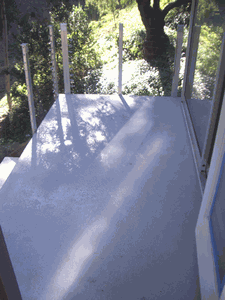


Step 1 Preparing the surface for install The
balcony to the right is coated with a dex-o-tech
hardened fiberglass coating and is an ideal
surface to install the tiles over. Fiberglass
coatings, EPDM membranes or torch down
roofing material are also an ideal surface to
cover with our deck tiles. Deck tiles can be
installed over virtually any flat waterproof
surface without any damage to the sublayer..
An even well drained surface is the key to good
results with this product. If it is new
construction like this then you are ready to go.
If it is an existing waterproof coating then
sweep and clean and give it a good coat with
the appropriate sealer see our deck tile
maintenance section for more info.
balcony to the right is coated with a dex-o-tech
hardened fiberglass coating and is an ideal
surface to install the tiles over. Fiberglass
coatings, EPDM membranes or torch down
roofing material are also an ideal surface to
cover with our deck tiles. Deck tiles can be
installed over virtually any flat waterproof
surface without any damage to the sublayer..
An even well drained surface is the key to good
results with this product. If it is new
construction like this then you are ready to go.
If it is an existing waterproof coating then
sweep and clean and give it a good coat with
the appropriate sealer see our deck tile
maintenance section for more info.
Step 2 Start Laying your tiles from the outside
corner.. Start laying the tiles down in the best 90
degree corner on the leading edge of the deck and
work your way across the surface back to the
entrance to your home. Once you have filled in the
tiles over the area you may need to cut a row of
tiles to fit if you don't have a perfect dimension.
This is easily done by cutting the back of the tile
and removing the wood slats or cutting right
across both the wood and backing with a saw. For
small cuts we recommend removing the wood and
pre-cut the piece then re-afix to the base.
corner.. Start laying the tiles down in the best 90
degree corner on the leading edge of the deck and
work your way across the surface back to the
entrance to your home. Once you have filled in the
tiles over the area you may need to cut a row of
tiles to fit if you don't have a perfect dimension.
This is easily done by cutting the back of the tile
and removing the wood slats or cutting right
across both the wood and backing with a saw. For
small cuts we recommend removing the wood and
pre-cut the piece then re-afix to the base.

Step 3 Cutting the tiles.. To Cut the tiles we recommend
using a table saw, skill saw, or jigsaw with a diamond blade
tip. This way you will obtain a clean cut edge. We
recommend sanding the edge to obtain a factory edge again
after cutting. Also a wax seal is recommended after cutting.
You must take measurements first of the area you need to
fill, for instance this install required us to remove one of the
wood slats for a 3/4 sized tile.
Please be careful when cutting tiles not to cut into the
screws on the back as you can damage the saw blade. You
can remove the screws and replace them after the cut has
been made.
using a table saw, skill saw, or jigsaw with a diamond blade
tip. This way you will obtain a clean cut edge. We
recommend sanding the edge to obtain a factory edge again
after cutting. Also a wax seal is recommended after cutting.
You must take measurements first of the area you need to
fill, for instance this install required us to remove one of the
wood slats for a 3/4 sized tile.
Please be careful when cutting tiles not to cut into the
screws on the back as you can damage the saw blade. You
can remove the screws and replace them after the cut has
been made.
Step 4 Finish up the perimeter
Insert your modified tile into the last rows and that
completes the project. This particular install took under an
hour. If you have rounded edges or multiple angles to cut
around it may take longer. The ease of installation and the
ability to remove the deck in the future is one of the great
advantages of our deck tiles.
Insert your modified tile into the last rows and that
completes the project. This particular install took under an
hour. If you have rounded edges or multiple angles to cut
around it may take longer. The ease of installation and the
ability to remove the deck in the future is one of the great
advantages of our deck tiles.
Rounded Edge Cuts The tiles are cut with a
jigsaw to allow for the curve.
jigsaw to allow for the curve.

Cutting the tiles with a table saw
Cutting with jig saw
Step 5 You are done To the side is the
completed deck with reducers on the edge. Once
stainless steel railings are added with an Ipe handrail
this deck will be 100% completed.
completed deck with reducers on the edge. Once
stainless steel railings are added with an Ipe handrail
this deck will be 100% completed.


A typical EPDM membrane balcony
surface
surface
Picture on the right shows a
standard cut tile using a razor knife
to cut the backing and as a result
one wood slat. This is the easiest
method to cut our tiles. Or you can
use a chop saw or jigsaw for
straight cuts across the wood and
plastic
standard cut tile using a razor knife
to cut the backing and as a result
one wood slat. This is the easiest
method to cut our tiles. Or you can
use a chop saw or jigsaw for
straight cuts across the wood and
plastic

Sleeper system under the tiles The composite deck boards have been laid out as
sleepers under the deck tiles. The use of plastic shims and small pieces of composite
are glued to level the sleepers. Construction adhesive can be used to secure the shims.
Or you can use a concrete skim coat to smooth the surface to accept the deck tiles.
Concrete self levelers are poured over the concrete to create a level smooth surface.
sleepers under the deck tiles. The use of plastic shims and small pieces of composite
are glued to level the sleepers. Construction adhesive can be used to secure the shims.
Or you can use a concrete skim coat to smooth the surface to accept the deck tiles.
Concrete self levelers are poured over the concrete to create a level smooth surface.
Type your Installation
questions here
questions here


Deck tiles over pressure treated framing?
Our tiles can be installed over existing deck framing by adding pressure treated material spaced out
(laid flat) over the joists. Our decking tiles can then be installed over this as the final surface. Below
are some examples of our decking tiles with this type of system
Our tiles can be installed over existing deck framing by adding pressure treated material spaced out
(laid flat) over the joists. Our decking tiles can then be installed over this as the final surface. Below
are some examples of our decking tiles with this type of system
Exposed framing seen underneath the tiles
Just snap the tiles over the
framing, you can run
electrical or irrigation lines
very easily with this type of
system and have full access
to the sub structure to
modify in the future. If a
waterproofing is required lay
plywood and seal with a
membrane.
framing, you can run
electrical or irrigation lines
very easily with this type of
system and have full access
to the sub structure to
modify in the future. If a
waterproofing is required lay
plywood and seal with a
membrane.
Our modular deck tiles have been the number one in quality and durability across the nation for over 5 years and over 10 years internationally .
Check out this quick installation
video done with our own Eco Arbor
deck tile products. Roger Cook and
crew have fun in San Francisco
with our deck tiles. This could be
perhaps the most informative deck
tile video installation to date.
Click here to see the video in a new
browser window
video done with our own Eco Arbor
deck tile products. Roger Cook and
crew have fun in San Francisco
with our deck tiles. This could be
perhaps the most informative deck
tile video installation to date.
Click here to see the video in a new
browser window


Special Deck Tiles Applications